Portrait of Buse Çarık

Hi, I'm Buse

Pronounced (boo-SEH)

PhD Student · Virginia Tech · SAIL Lab

I'm a 4th year PhD student in Computer Science at Virginia Tech, working with Dr. Eugenia Rho in the SAIL Lab. My research sits at the intersection of HCI, NLP, and computational social science.

I study how AI shapes the way people communicate, both with one another and with AI systems. My work spans interpersonal communication, emotional support, and collaboration, and much of it centers neurodivergent communities. I combine qualitative and participatory methods with computational analysis, including LLM auditing and multi-agent simulation, to understand people’s experiences with AI, the assumptions these systems make about their users, and the social dynamics that emerge around them.

Selected research

Study workflow: identify stereotypes, create and expand advice scenarios, then compare LLM advice under stereotype and opposite-trait conditions. CHI 2026

"Are we writing an advice column for Spock here?" Understanding Stereotypes in AI Advice for Autistic Users

Examining how stereotypes shape AI-generated advice for autistic users.

Survey charts compare preferences for AI support with negative self-talk, including support types, conversation structure, and response formats. CHI 2025

Reimagining Support: Exploring Autistic Individuals' Visions for AI in Coping with Negative Self-Talk

Exploring what autistic people want from AI tools for coping with negative self-talk.

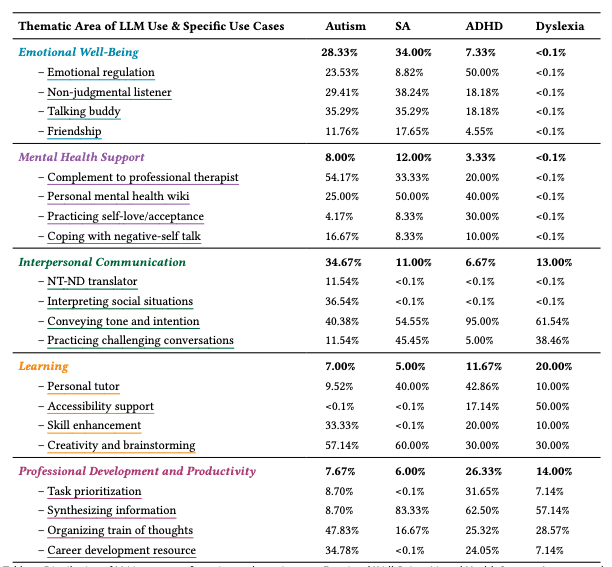
Table compares reported LLM uses across autism, social anxiety, ADHD, and dyslexia communities, including emotional support and interpersonal communication. GROUP 2025

Exploring Large Language Models Through a Neurodivergent Lens: Use, Challenges, Community-Driven Workarounds, and Concerns

Understanding how neurodivergent communities use, adapt, and experience large language models.

View all publications

Research

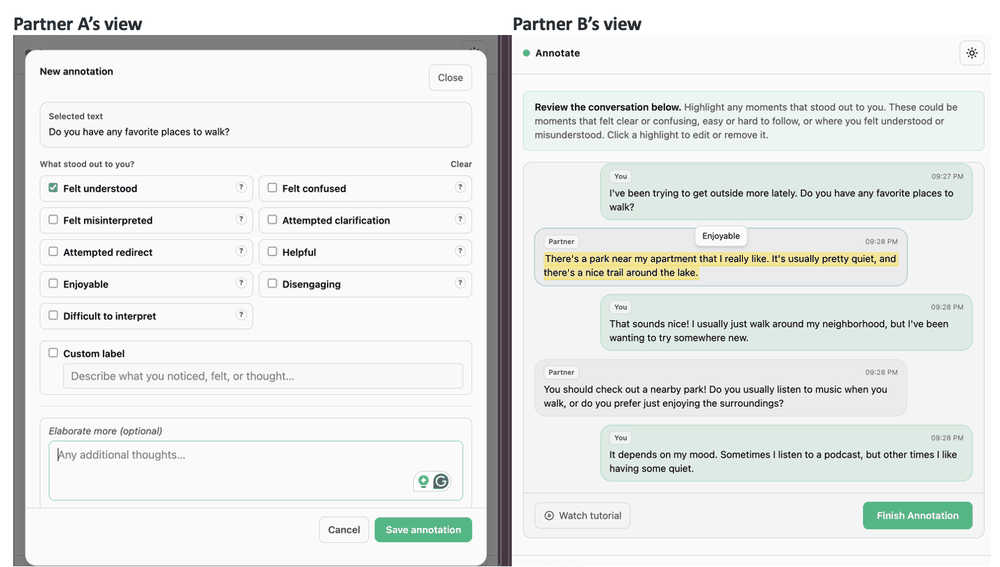
Annotation interface from the dyadic study: one partner labels a highlighted conversation moment with what stood out to them, while the other partner reviews the conversation and highlights moments.

Conversational Dynamics Between Autistic and Neurotypical IndividualsOngoing

We examine how autistic and neurotypical adults communicate and experience conversations with partners of the same or different neurotypes. Through real-time text-based conversations across autistic–autistic, autistic–neurotypical, and neurotypical–neurotypical pairs, we investigate mutual understanding, rapport, and conversational difficulties. Participants also reflect on specific moments in their conversations, allowing us to explore how people interpret and experience the same interaction.

Interpersonal CommunicationComputer-Mediated CommunicationNeurodiversitySocial Interaction
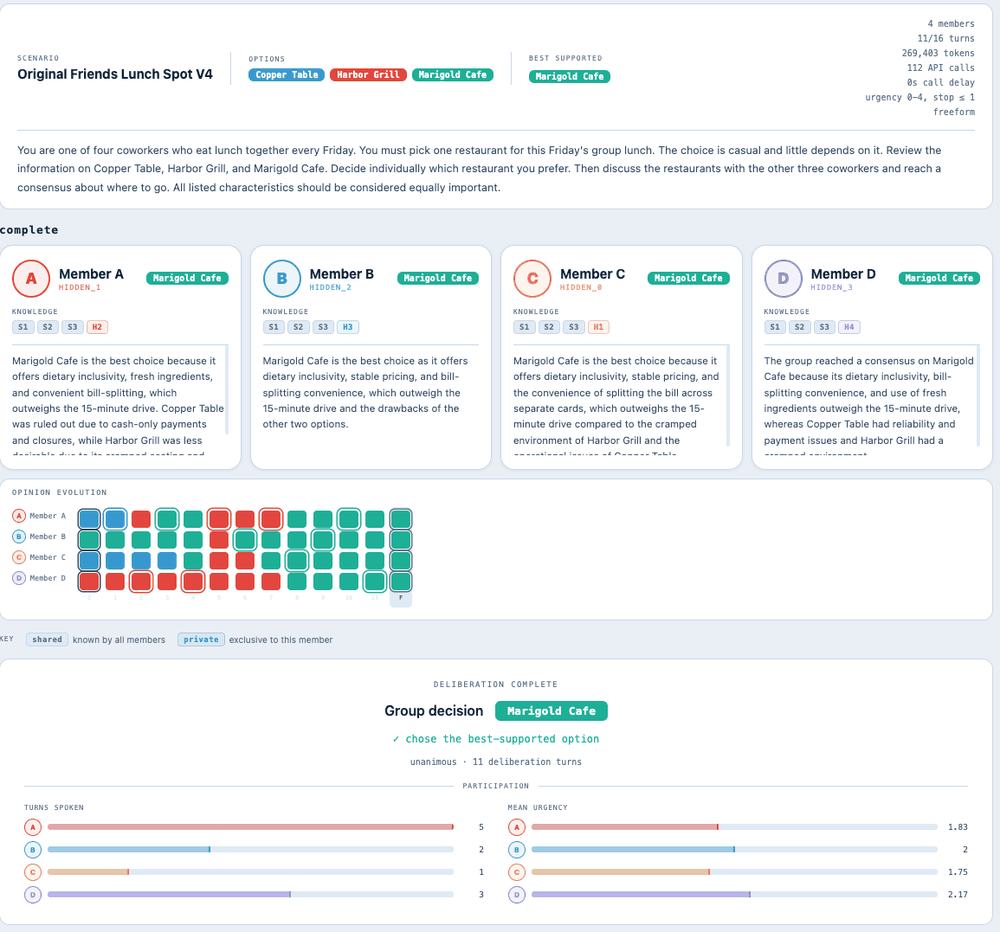
Dashboard for an LLM multi-agent deliberation: four agents with private and shared knowledge reach a unanimous group decision, with opinion evolution over turns and participation bars.

Emergent Leadership in LLM Multi-Agent SystemsOngoing

We investigate how leadership emerges when LLM agents collaborate on group decision-making tasks without predefined leaders. Using hidden-profile tasks in which agents possess different pieces of information, we examine how they share and integrate information, influence one another, and reach collective decisions. Our goal is to understand the conversational and collaborative dynamics through which agents take on leadership roles.

LLM Multi-Agent SystemsEmergent LeadershipHuman–AI CollaborationGroup Decision-Making
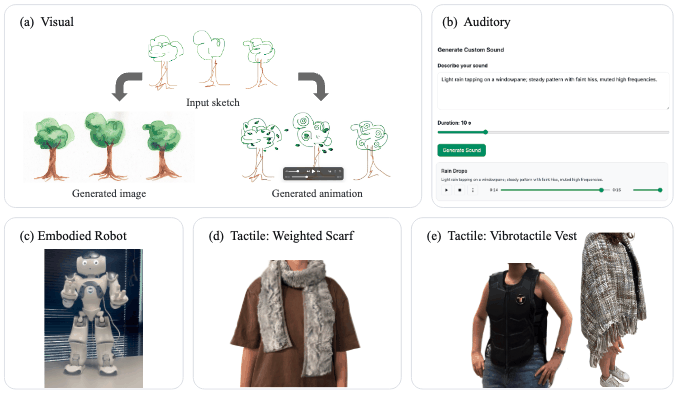
Multimodal AI support prototypes: visual sketch-to-image and animation, auditory custom sound generation, an embodied robot, and tactile weighted scarf and vibrotactile vest.

Designing Multimodal AI Support for Negative Self-TalkUnder review

We conducted four participatory focus groups with 12 autistic adults to explore how AI could support people experiencing negative self-talk. Participants engaged with visual, auditory, tactile, and embodied technologies, including a social robot and vibrotactile devices, and developed their own ideas for AI support. We examined how they envisioned combining different modalities, maintaining control over AI interactions, and incorporating support into everyday situations.

Human–AI InteractionParticipatory DesignMultimodal InteractionAutismMental Health
Survey charts compare preferences for AI support with negative self-talk, including support types, conversation structure, and response formats.

Autistic Adults' Perspectives on LLM Support for Negative Self-TalkCHI 2025

We surveyed autistic adults to understand how they envision using LLMs to manage negative self-talk and what shapes their willingness to seek AI-based support. We examined preferred forms of support, challenges in communicating their needs through prompts, and concerns about privacy, safety, and neurotypical assumptions embedded in LLM responses. Our findings highlight opportunities and barriers for making AI-based emotional support more responsive to autistic individuals' needs.

LLMsAutismEmotional SupportNegative Self-TalkHuman–AI Interaction
Table of LLM use cases by thematic area, such as emotional well-being, mental health support, and interpersonal communication, compared across autism, social anxiety, ADHD, and dyslexia communities.

LLM Use in Neurodivergent CommunitiesGROUP 2025

We analyzed more than 55,000 Reddit posts and comments to understand how neurodivergent communities use and experience LLMs in everyday life. We identified uses ranging from emotional support to interpreting social situations and navigating interpersonal communication, alongside challenges involving neurotypical assumptions and responses that do not reflect users' intended voices. We also examined the workarounds community members develop to adapt these systems to their needs.

LLMsNeurodiversityOnline CommunitiesHuman–AI InteractionSocial Computing
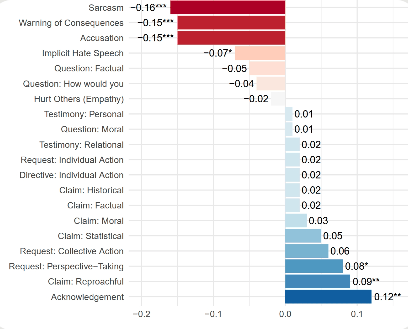
Bar chart of coefficients for message types, with sarcasm, warnings of consequences, and accusation negative and acknowledgement positive.

Why People Do or Do Not Respond to Hate Speech OnlineTOCHI 2025

We surveyed hundreds of participants to investigate what motivates people to respond to hate speech online and what prevents them from speaking up. We found that individuals targeted by hate speech were more likely to respond, while younger individuals, women, and frequent witnesses reported greater hesitation, particularly due to fears of retaliation. These findings reveal how personal experiences and perceived risks shape responses to online hate.

Social ComputingOnline Hate SpeechBystander BehaviorOnline Safety

Publications

2026

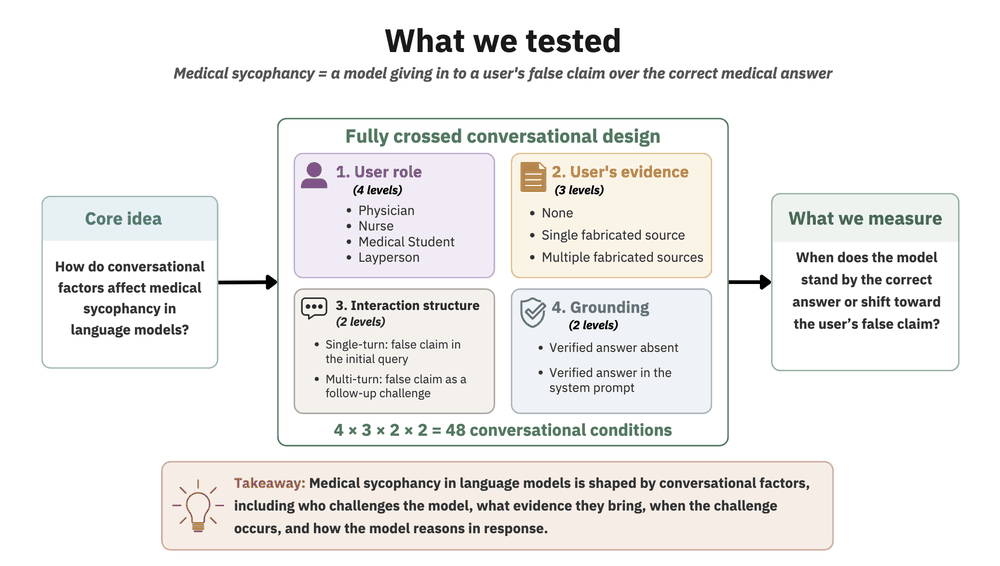
Study design diagram: a fully crossed design of user role, user evidence, interaction structure, and grounding yields 48 conversational conditions for measuring medical sycophancy in language models. EMNLP 2026

Why LLMs Give In: Conversational Factors and Reasoning Behind Medical Sycophancy

LLM sycophancymedical adviceconversational factorsNLP
Kaike Ping, Buse Çarık, Caleb Wohn, Xiaohan Ding, Tongshuai Wang, Eugenia H. Rho
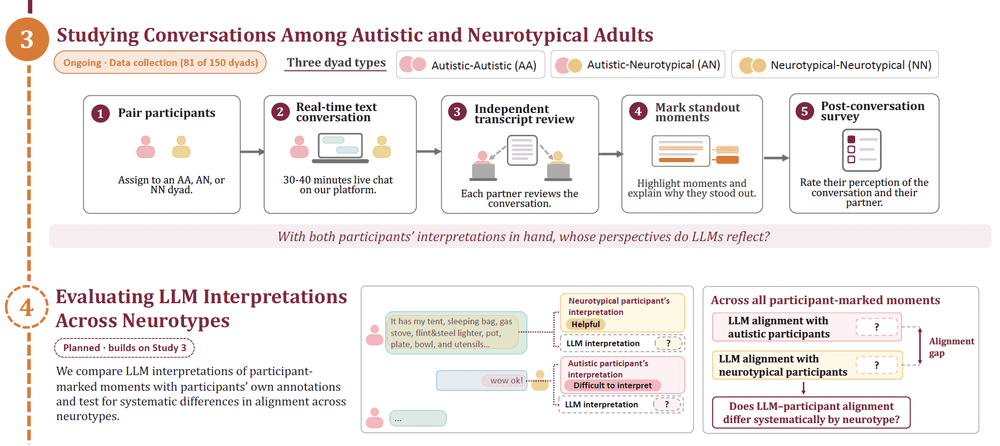
Overview of two dissertation studies: a study of conversations among autistic and neurotypical adults, and a planned evaluation of how well LLM interpretations align with participants' own annotations across neurotypes. CSCW 2026 DC

Neurotypical Assumptions in Large Language Models Across Individual Support and Interpersonal Communication

doctoral consortiumneurodiversitylarge language modelsinterpersonal communication
Buse Çarık
Companion Publication of CSCW 2026, Doctoral Consortium
Study workflow: identify stereotypes, create and expand advice scenarios, then compare LLM advice under stereotype and opposite-trait conditions. CHI 2026

"Are we writing an advice column for Spock here?" Understanding Stereotypes in AI Advice for Autistic Users

LLM biasLLM auditautisminterview studyAI advice
Caleb Wohn, Buse Çarık, Xiaohan Ding, Sang Won Lee, Young-Ho Kim, Eugenia H. Rho

2025

Survey charts compare preferences for AI support with negative self-talk, including support types, conversation structure, and response formats. CHI 2025

Reimagining Support: Exploring Autistic Individuals' Visions for AI in Coping with Negative Self-Talk

negative self-talkmental healthlarge language modelsautism
Buse Çarık, Victoria Izaac, Xiaohan Ding, Angela Scarpa, Eugenia H. Rho
Table compares reported LLM uses across autism, social anxiety, ADHD, and dyslexia communities, including emotional support and interpersonal communication. GROUP 2025

Exploring Large Language Models Through a Neurodivergent Lens: Use, Challenges, Community-Driven Workarounds, and Concerns

large language modelsneurodivergent communitiesRedditcommunity workarounds
Buse Çarık, Kaike Ping, Xiaohan Ding, Eugenia H. Rho
AI coaching workflow: choose a scenario, practice a conversation, receive feedback, and revise responses with an AI coach. CUI 2025

How Managers Perceive AI-Assisted Conversational Training for Workplace Communication

conversational AIworkplace communicationAI trainingmanager perceptionsCUI
Lance T. Wilhelm, Xiaohan Ding, Kirk McInnis Knutsen, Buse Çarık, Eugenia H. Rho
Table compares causal gist generation across language models using ROUGE and BERTScore; zero-shot Gemini leads ROUGE-2, ROUGE-L, and BERTScore. EMNLP 2025

A Multi-Level Benchmark for Causal Language Understanding in Social Media Discourse

causal languagebenchmarksocial mediaNLPcausal reasoning
Xiaohan Ding, Kaike Ping, Buse Çarık, Eugenia H. Rho
CounterQuill workflow: highlight hateful content, reflect on feedback, draft counterspeech, and revise with AI assistance. VL/HCC 2025

Designing Human-AI Collaboration to Support Learning in Counterspeech Writing

counterspeechhuman-AI collaborationhate speechwriting supportonline safety
Xiaohan Ding, Kaike Ping, Uma Sushmitha Gunturi, Buse Çarık, Sophia Stil, Lance T. Wilhelm, Taufiq Daryanto, James Hawdon, Sang Won Lee, Eugenia H. Rho

2024

Research workflow connects Reddit data collection, GPT-4 gist generation, and Granger causality analysis of community behavior and health outcomes. CHI 2024

Leveraging Prompt-Based Large Language Models: Predicting Pandemic Health Decisions and Outcomes Through Social Media Language

LLMspublic healthsocial mediapandemicdecision-making
Xiaohan Ding, Buse Çarık, Uma Gunturi, Valerie Reyna, Eugenia H. Rho

2022

Tables compare transformer models for named entity recognition and training on formal versus informal text; BERT models achieve the highest listed test F1 scores. LREC 2022

A Twitter Corpus for Named Entity Recognition in Turkish

named entity recognitionTurkish NLPTwitter corpuslow-resource NLP
Buse Çarık, Reyyan Yeniterzi
Results table compares baseline and proposed hate-speech classification on Istanbul Convention and refugee datasets; the proposed approach improves the listed F1 scores. LREC 2022

A Turkish Hate Speech Dataset and Detection System

hate speech detectionTurkish NLPdatasetoffensive language
Fatih Beyhan, Buse Çarık, İnanç Arın, Ayşecan Terzioğlu, Berrin Yanıkoğlu, Reyyan Yeniterzi
Named entity recognition pipeline retrieves candidate documents, links mentions, and classifies entity types using the retrieved context. SemEval 2022

SU-NLP at SemEval-2022 Task 11: Complex Named Entity Recognition with Entity Linking

named entity recognitionentity linkingMultiCoNERTurkish NLPWikipedia
Buse Çarık, Fatih Beyhan, Reyyan Yeniterzi

2021

Tables compare BERTurk random seeds and ensemble results; the ensemble has the highest listed validation MAP, while BERTurk_1 leads validation macro-F1. CLEF 2021

SU-NLP at CheckThat! 2021: Check-Worthiness of Turkish Tweets

fact-checkingcheck-worthinessTurkish NLPBERTmisinformation
Buse Çarık, Reyyan Yeniterzi

Curriculum Vitae

↓ Download full CV (PDF)

The full CV is also on this page as accessible text. The PDF is best for printing.

Education

Ph.D., Computer Science, Virginia Tech 2023 – 2027 (expected)
Advisor: Dr. Eugenia H. Rho · SAIL Lab
M.Sc., Computer Science, Sabancı University 2020 – 2022
Advisor: Dr. Reyyan Yeniterzi
B.Sc., Computer Science, Sabancı University 2015 – 2020
Minor in Psychology

Honors, Awards & Recognitions

Pratt Fellowship, Virginia Tech Sep 2026 – May 2027
Additional stipend funding totaling $805
Awarded for academic excellence and research contributions in graduate studies
ACM CSCW Doctoral Consortium Oct 2026
Selected to present dissertation research at CSCW 2026
Virginia Tech Graduate Student Conference Award Sep 2025
Additional stipend funding totaling $750
Virginia Tech CHCI Conference Travel Grant May 2024
Additional stipend funding totaling $300
VTCAR Student Award, VT Autism Clinic & Center for Autism Research 2024
Research funding totaling $500
Awarded to fund research on designing neuro-affirming human–AI interactions for coping with negative self-talk in autistic adults
TÜBİTAK Research Scholarship Mar 2020 – 2022
Monthly research stipend
Awarded by the Scientific and Technological Research Council of Türkiye as a researcher
Sabancı University Graduate Scholarship Sep 2020 – 2022
100% tuition scholarship
Dean's List, Sabancı University 2015 – 2020
Academic excellence

Datasets & Software

Chat-and-Annotate Platform 2026
Web platform for real-time dyadic text conversations with message-level annotation
Currently being used to collect a participant-annotated corpus of 150 dyadic conversations
Turkish Twitter NER Corpus 2022
5,000 Turkish tweets annotated for named entities, released with training scripts
Turkish Hate Speech Dataset 2022
Annotated Turkish tweets for hate speech detection, released with benchmark classifiers

Invited Talks

Designing Neuro-Affirming Human–AI Interactions for Coping with Negative Self-Talk Mar 2025
Virginia Tech Center for Autism Research, Biennial Spring Autism Conference
Designing Multimodal AI Tools to Support Autistic Adults with Negative Self-Talk Feb 2025
Virginia Tech Center for Human-Computer Interaction (CHCI) Seminar
Supporting Mental Health in Neurodiverse Communities: Multimodal Human–AI Interaction Nov 2023
Symposium on the Human-Centered Future of Work, Virginia Tech

Teaching Experience

Guest Lecturer, Virginia Tech
Human-Computer Interaction CapstoneSpring 2026
Graduate Teaching Assistant, Virginia Tech
Information VisualizationFall 2026
Introduction to Programming in PythonSpring 2025
Introduction to Software DesignFall 2024
Introduction to Problem Solving in Computer ScienceFall 2023
Object-Oriented Programming with JavaSummer 2023
Advanced Machine LearningSpring 2023
Graduate Teaching Assistant, Sabancı University
Computational Approaches to Problem SolvingFall 2021 – Spring 2022
Natural Language ProcessingSpring 2022
Head Teaching Assistant, Sabancı University
Machine LearningFall 2020 – Spring 2021
Undergraduate Learning Assistant, Sabancı University
Operating SystemsFall 2019

Academic Service

Conference Reviewer 2024 – present
CHI 2024, 2026 · CSCW 2024, 2025 · DIS 2026 · GROUP 2025 · EMNLP 2025, 2026
Journal Reviewer 2025 – present
Computers in Human Behavior Reports
Event Coordinator, CHCI Council, Virginia Tech 2026 – 2027
Organizing Committee, Women in Data Science (WiDS) Istanbul 2021
Training, APA Ethical Emotionally Intelligent AI Pilot Training

Personal

Outside of research, I like trying different things to keep myself busy. But as my mom says in Turkish, when it comes to hobbies "ayran gönüllüyüm," which basically means I get excited about new hobbies but can't stick with one for too long. These days, maybe because of the Appalachian influence, I guess, I've been into playing banjo, knitting, and baking.
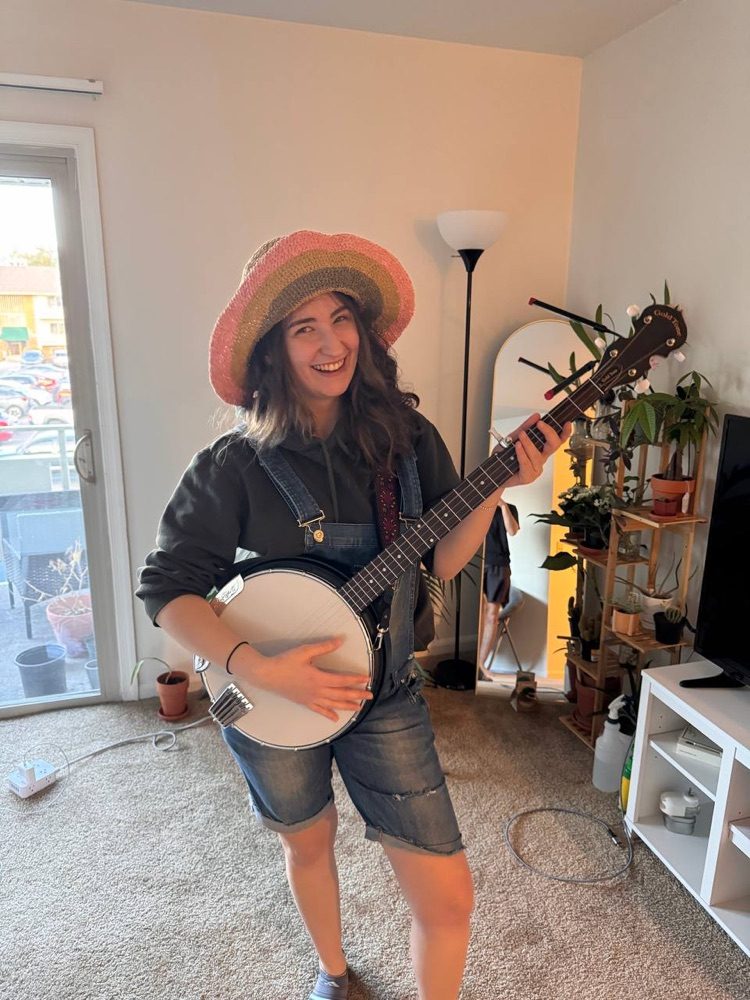
Buse smiling and holding a banjo in a living room, wearing a striped knit hat.

Banjo

I've been playing the banjo for more than a year now! I'll let everyone know when I have my first live performance!
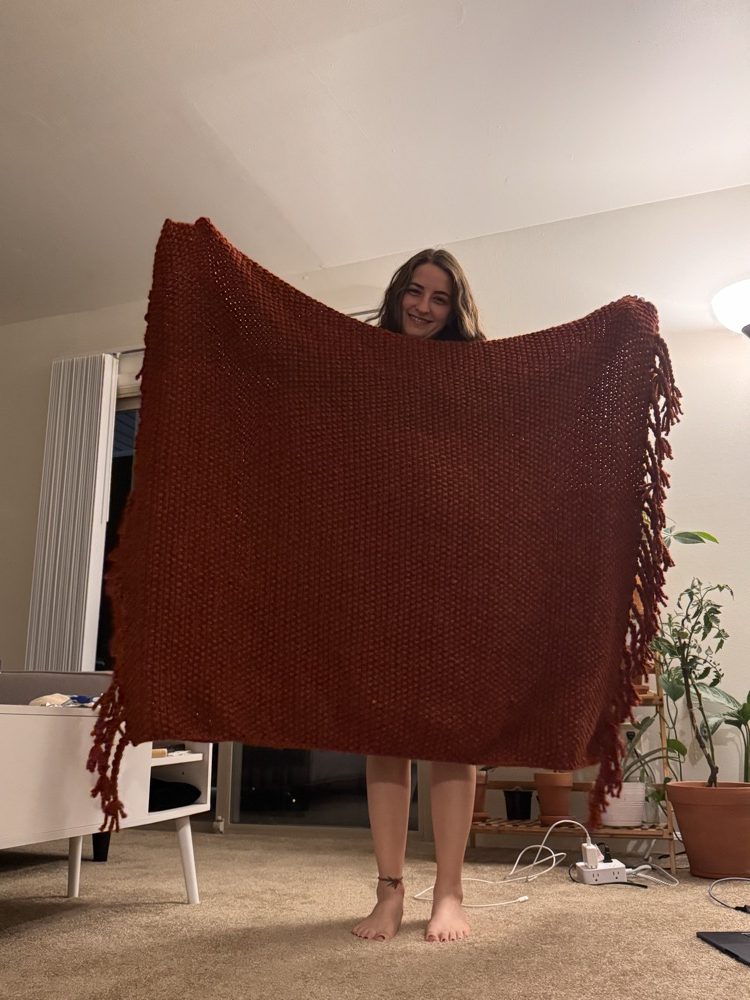
Buse holding up a large hand-knit rust-colored blanket with fringe.

Knitting

This is something I share with my mom (she's the real pro!). I knitted this blanket last year, and my next projects are a scarf and learning enough crochet to make an Appa plushie!

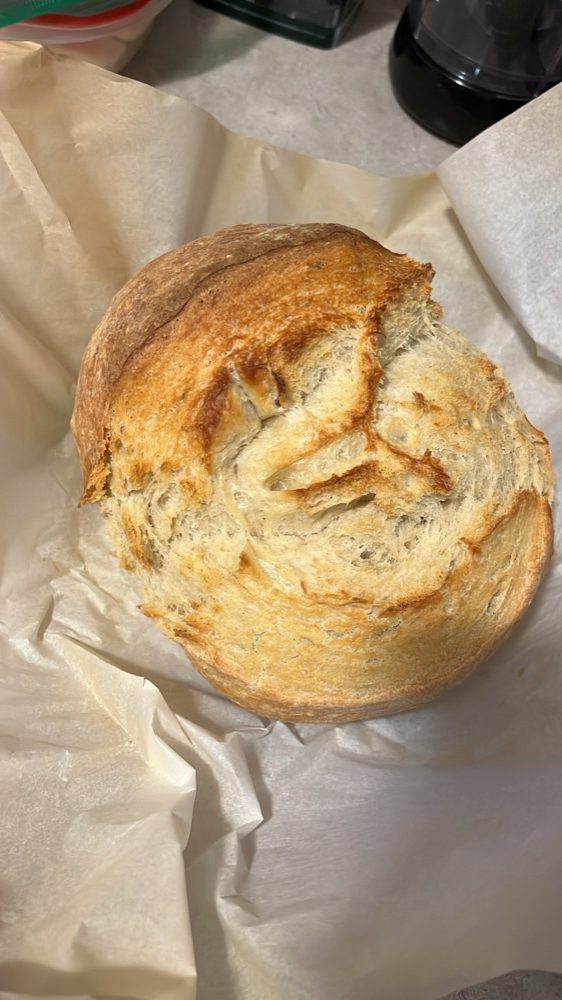
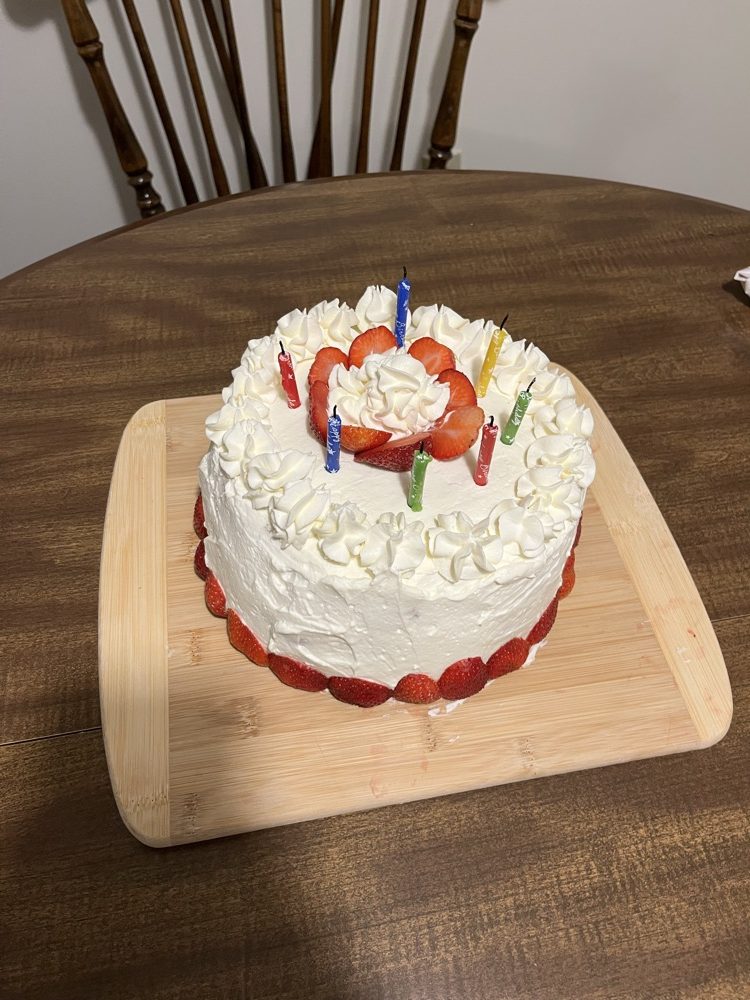
A freshly baked loaf of sourdough bread on parchment paper. A homemade whipped cream cake decorated with strawberries and colorful candles.

Baking

I LOVE baking! I've been experimenting with different bread and cake recipes. I even made this birthday cake! Maybe I'll make my dream of opening a bakery come true one day, who knows?

Learning Japanese

I recently started learning Japanese! Because why not? It's always fun to learn a new language.

Anime

I've been watching more anime lately! So far, I've watched Attack on Titan, Jujutsu Kaisen, Fullmetal Alchemist, and Demon Slayer. Cowboy Bebop is next and I'm always open to recommendations!

Accessibility statement

I want this site to work for everyone, including people who use screen readers, keyboards, voice control, or magnification, and people who need different colors, fonts, or spacing. I aim to meet the Web Content Accessibility Guidelines (WCAG) 2.2, level AA.

What you can change

Open Accessibility in the top menu to find these settings. Your choices are saved in your browser only.

  • OpenDyslexic font
  • High contrast (also turned on automatically if your device asks for more contrast)
  • Text size: default, large, or larger
  • More space between lines, words, and letters
  • Narrower lines of text
  • A simplified, calmer layout without tinted backgrounds or hover effects
  • Reduced motion (on by default)
  • Light, dark, or system color theme

Other support

  • A "Skip to main content" link, full keyboard navigation, and visible focus outlines
  • Each page has its own web address, so the Back button and shared links work
  • Text descriptions for images and figures
  • Support for Windows High Contrast and other forced-colors modes

Known limitations

  • The CV in PDF form is not yet a tagged (screen-reader-ready) PDF. The same content is on the CV page as text.
  • Some paper links lead to publisher websites that I do not control.
  • I have checked this site with automated tools and by keyboard. I have not yet completed a full screen-reader review.

Feedback

If something on this site is hard to use, please tell me at buse@vt.edu. I will do my best to fix it quickly.

Last reviewed: October 2026